Iran’s nuclear dossier is far more than a technical or legal issue; it is fundamentally a strategic matter tied to the future security of the Iranian nation. When discussing international commitments, we are in fact defining the boundaries of power and vulnerability for future generations. Any permanent commitment—such as renouncing the production of nuclear weapons “forever”—could effectively amount to tying the hands of the Iranian nation in the face of unpredictable future developments.
The history of international relations demonstrates that stability is neither permanent nor guaranteed. In a region such as West Asia, the security dilemma can evolve at any moment, assuming new dimensions in which traditional deterrence mechanisms may no longer prove sufficient.
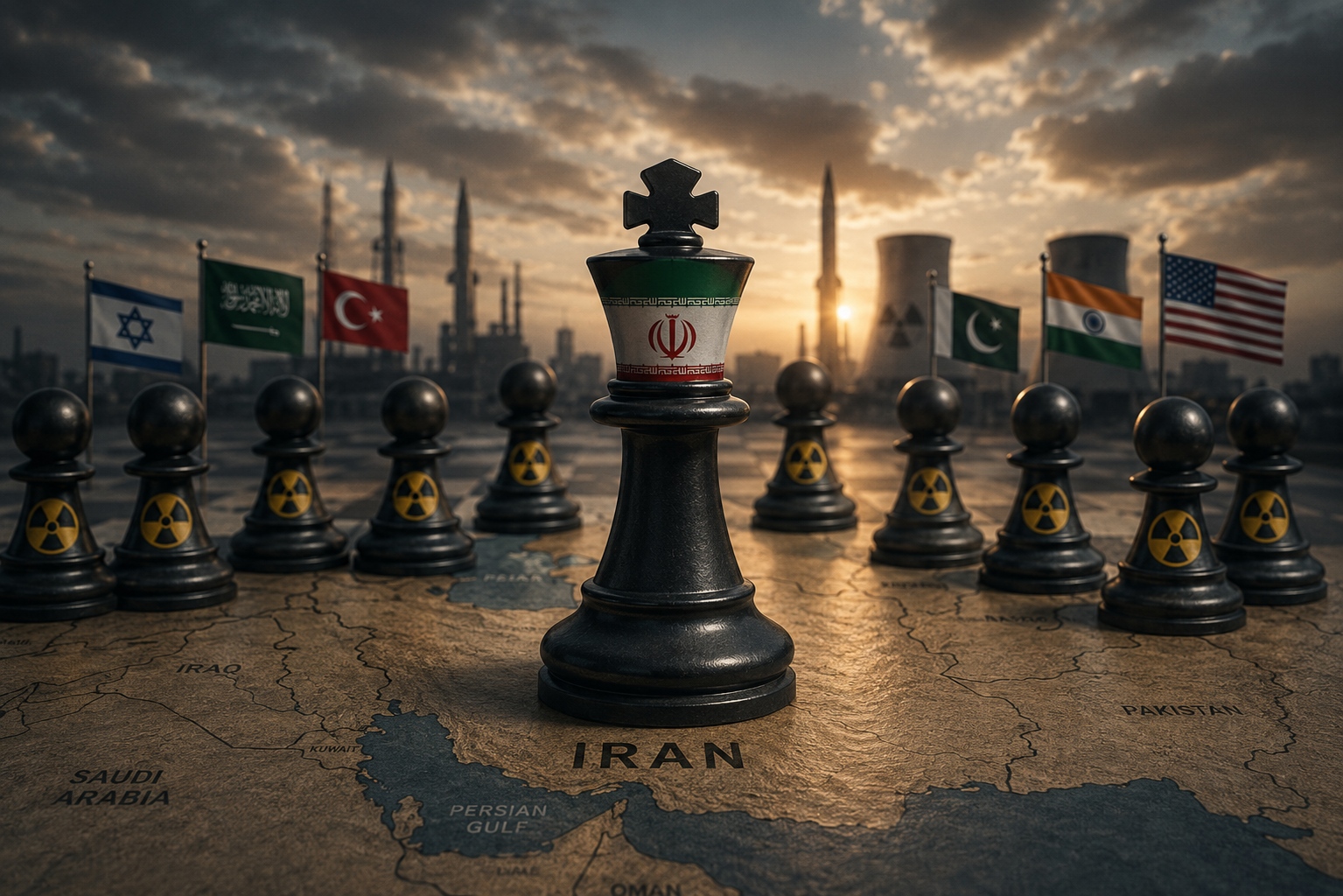
No government possesses the moral or political authority to permanently deprive its descendants of the right to legitimate self-defense against contingencies that—even if unlikely today—may emerge in the future. Looking a century ahead, one can envision a world in which the current international order has collapsed and new powers have emerged, with their relations founded primarily upon nuclear balances of power. In such a plausible scenario, if Iran’s neighbors—whether today’s friends who may become tomorrow’s rivals, or today’s rivals who may evolve into outright adversaries—possess nuclear weapons, a non-nuclear Iran could find itself strategically vulnerable and effectively defenseless. Within the international system, weakness often serves as an invitation to coercion and external domination.
National security is a dynamic concept and cannot be confined within the political decisions of a particular historical era. Predicting the military, technological, and geopolitical realities of the year 2126 is virtually impossible. It is conceivable that by then, nuclear weapons may have become ordinary instruments possessed by many states, making their possession a strategic necessity rather than an exception.
If contemporary Iran were to undertake an irreversible commitment, it would essentially be risking the security and defensive capabilities of future generations in exchange for alleviating present-day economic pressures. Such a bargain would be fundamentally unequal: economies can be rebuilt, whereas sovereignty and security compromised by strategic weakness may never be fully restored.
At the same time, attention must be paid to the flexibility inherent in Iran’s Islamic jurisprudential and political system. The Supreme Leader’s fatwa prohibiting nuclear weapons represents a wise response to contemporary realities and reflects the ethical principles of Islam under current circumstances. Yet Islamic jurisprudence has long recognized that secondary rulings are grounded in public interest (maslahah) and the preservation of the Islamic community.
Should the survival of society one day come under existential threat, and should the only viable means of safeguarding millions of Iranian Muslims be the possession of nuclear weapons in the face of nuclear-armed adversaries, jurisprudential principles would dictate that the preservation of life takes precedence over other considerations. Consequently, a permanent and legally binding international commitment could represent a profound strategic error, potentially undermining the nation’s security and defensive capacity in the face of future existential threats.
A century from now, the world may witness an intense arms race among Iran’s neighboring states. If Iran has already permanently disarmed itself in advance, it could effectively become a sphere of influence for nuclear powers. In international relations, the intentions of states—whether friendly or hostile—can change overnight. A friendly neighbor may become an aggressive adversary, which is precisely why military capabilities remain the ultimate guarantors of stability, security, and national survival.
A perpetual commitment not to acquire nuclear weapons is, in essence, a commitment to remain strategically weaker. A powerful Iran in 2126 is one that has preserved every available option for protecting its citizens. No one can guarantee that existing international structures will remain intact a century from now, nor can anyone guarantee that international institutions will possess the capacity to prevent aggression against a non-nuclear state—a capacity they often struggle to demonstrate even today.
The experiences of Ukraine and Libya illustrate the potentially grave consequences of relinquishing strategic capabilities in exchange for paper guarantees. Ultimately, it is power that commands security and respect. Closing off the highest level of defensive development would effectively condemn future generations to live under the shadow of nuclear-armed neighbors who may no longer adhere to ethical principles or international agreements.
A truly forward-looking statesman must think not only about present prosperity but also about the security of future centuries. Temporary pressures should not be allowed to produce permanent strategic vulnerability. Therefore, any negotiations or agreements should be structured in a manner that preserves the possibility of redefining national security strategies in the decades ahead.
Iran today should not, by its own hand, create a permanent strategic weakness that structurally shifts the balance of power against future generations. A stable balance of power can only endure when both sides retain the potential for strategic parity.
The author considers nuclear deterrence to be a strategic necessity. However, if the international community genuinely seeks a world free of nuclear weapons, such disarmament must be global, universal, and symmetrical. It must not become a mechanism for preserving the nuclear monopoly of some states while permanently denying others the same capability.
The responsibility of safeguarding the homeland is a trust inherited from previous generations and one that must be transmitted intact to future generations. Passing on this trust while deliberately weakening the nation’s defensive capabilities would constitute a historical injustice that future generations are unlikely to forgive.
Iran’s national security architecture must be designed to respond effectively and proportionately to every conceivable scenario, including the complete nuclearization of both the region and the wider international system. The future is profoundly uncertain, and amid such uncertainty, the only reliable guarantor of peace remains undeniable hard power—a form of power that should not be permanently constrained at any negotiating table.